
Biofilm Formation: Understanding Microbial Communities and Their Clinical Impact
Recognize that biofilms represent one of the most successful survival strategies in microbiology, with sessile bacterial communities exhibiting up to 1,000-fold greater tolerance to antimicrobial agents compared to their planktonic counterparts. This structural organization accounts for approximately 80% of chronic and recurrent human infections, fundamentally altering how we approach treatment protocols in modern healthcare. The extracellular polymeric substance (EPS) matrix that encases these communities creates a protective barrier that contributes significantly to antibiotic resistance presenting one of the most pressing challenges in contemporary medicine.
Understanding biofilm development requires examining the distinct stages that transform free-floating bacteria into resilient, organized communities. Initial attachment occurs within minutes of surface contact, mediated by weak van der Waals forces and electrostatic interactions. This reversible adhesion rapidly transitions to irreversible attachment as cells produce adhesins and begin synthesizing the EPS matrix. Within hours, microcolonies emerge through clonal growth and recruitment of additional planktonic cells.
The maturation phase introduces architectural complexity, with mushroom-shaped towers and water channels that facilitate nutrient distribution and waste removal throughout the structure. Quorum sensing molecules coordinate gene expression across the population, triggering production of virulence factors and strengthening matrix components. Cell density thresholds activate specific regulatory networks that fundamentally reprogram bacterial physiology.
This sophisticated developmental process creates structures that persist on medical devices, industrial equipment, and human tissue despite aggressive antimicrobial interventions. Catheter-associated infections, chronic wounds, and respiratory infections in cystic fibrosis patients exemplify the clinical burden these communities impose.
Current research illuminates novel disruption strategies targeting specific formation stages, from preventing initial adhesion to degrading mature matrix components. These advances promise to transform infection management by addressing biofilm-specific vulnerabilities rather than relying solely on conventional antimicrobial approaches that prove inadequate against established communities.
The Biofilm Formation Process: From Attachment to Maturation
Surface Conditioning and Initial Attachment
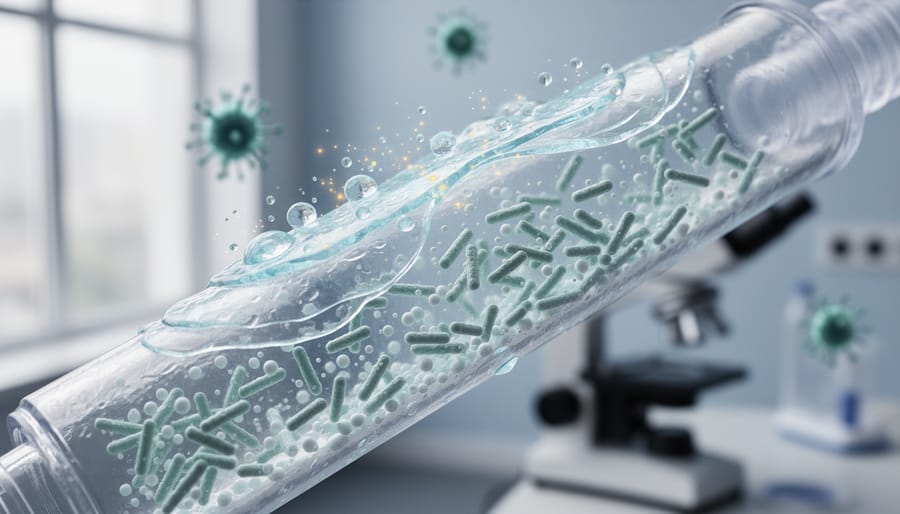
The formation of biofilm begins long before bacteria attach to a surface. Environmental conditioning films develop within minutes as organic molecules, proteins, polysaccharides, and glycoproteins adsorb onto substrates from the surrounding medium. These conditioning layers fundamentally alter surface chemistry, charge, and hydrophobicity, creating a more hospitable environment for microbial colonization. In clinical settings, host-derived proteins such as fibronectin, collagen, and fibrinogen rapidly coat medical devices, transforming inert materials into biological interfaces that bacteria recognize and exploit.
Initial bacterial attachment occurs in two distinct phases: reversible and irreversible. During reversible attachment, planktonic bacteria approach conditioned surfaces through a combination of passive transport, Brownian motion, and active motility. Flagella-mediated swimming enables bacteria to overcome repulsive forces and make initial surface contact. This early interaction remains weak, governed primarily by van der Waals forces and electrostatic interactions, allowing bacteria to detach if conditions prove unfavorable.
The transition to irreversible attachment represents a critical commitment point in biofilm formation. Bacteria deploy specialized appendages including type IV pili, curli fibers, and fimbriae to strengthen surface engagement. These adhesive structures facilitate twitching motility and provide mechanical anchoring. Surface proteins and adhesins mediate specific receptor-ligand binding to conditioning film components. Recent innovations in microscopy have revealed that this attachment phase triggers immediate gene expression changes, activating quorum sensing pathways that prepare cells for biofilm development. Understanding these molecular mechanisms offers promising targets for preventing biofilm-associated infections in healthcare environments.
Irreversible Attachment and Extracellular Polymeric Substance (EPS) Production
Following initial reversible attachment, bacterial cells transition to permanent colonization through the production of extracellular polymeric substances (EPS). This critical stage in biofilm formation marks a point of no return, where microorganisms commit to a surface-associated lifestyle and begin constructing the structural foundation that will protect the developing community.
EPS constitutes up to 90% of the biofilm’s dry mass and serves as the architectural scaffold that holds cells together while providing mechanical stability. The matrix composition varies among species and environmental conditions, but typically includes four major components: polysaccharides, proteins, extracellular DNA (eDNA), and lipids. Polysaccharides form the primary structural element, with well-characterized examples including alginate in Pseudomonas aeruginosa, the Pel and Psl polysaccharides in various Gram-negative bacteria, and poly-N-acetylglucosamine (PNAG) produced by Staphylococcus species.
Proteins within the matrix perform diverse functions beyond structure. Adhesins facilitate cell-to-cell and cell-to-surface interactions, while enzymes modify the local microenvironment. Extracellular DNA, initially considered a byproduct of cell lysis, plays essential roles in initial attachment, structural integrity, and horizontal gene transfer. Recent studies have revealed that eDNA chelates cations, creating zones that facilitate detachment and dispersal, highlighting its dual role in both stability and controlled biofilm dynamics.
The production of EPS represents a significant metabolic investment for bacteria, redirecting resources from growth to matrix synthesis. This transition is tightly regulated by quorum sensing systems and environmental cues, ensuring that EPS production occurs only when conditions favor biofilm development. Understanding these mechanisms has opened new avenues for anti-biofilm strategies targeting matrix components, offering promising approaches for controlling persistent infections and industrial biofouling challenges that impact global health infrastructure.
Genetic Mechanisms Controlling Biofilm Formation
Quorum Sensing: Cell-to-Cell Communication Networks
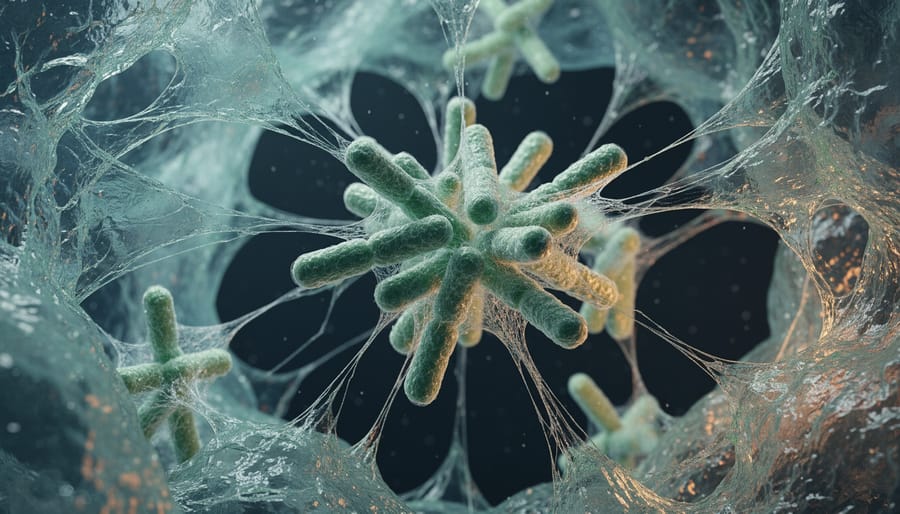
Quorum sensing serves as a sophisticated regulatory mechanism that enables bacteria to coordinate biofilm formation in response to cell density. Through this process, individual bacterial cells produce and detect small signaling molecules called autoinducers, which accumulate in the extracellular environment as the population grows. When autoinducer concentrations reach a critical threshold, they trigger coordinated gene expression changes that drive the transition from planktonic to biofilm growth.
Pseudomonas aeruginosa employs multiple overlapping quorum sensing circuits to regulate biofilm development. The las and rhl systems use acyl-homoserine lactones (AHLs) as primary signaling molecules, controlling the production of virulence factors, extracellular polysaccharides, and surface attachment proteins essential for mature biofilm architecture. The quinolone signal (PQS) system adds another regulatory layer, coordinating the timing of biofilm maturation and dispersal events.
Staphylococcus aureus utilizes a different chemical language through its accessory gene regulator (agr) system, which employs autoinducing peptides (AIPs) to modulate biofilm formation. Interestingly, agr activation typically inhibits biofilm development in S. aureus, demonstrating that bacterial communication systems can regulate both biofilm promotion and suppression depending on environmental conditions and metabolic state.
Recent advances in understanding these molecular dialogues have revealed that cross-species communication also influences biofilm formation. Some bacteria can detect and respond to signals from other species, creating complex interspecies networks within polymicrobial biofilms. These discoveries open new avenues for developing anti-biofilm therapies that target communication networks rather than individual bacterial cells, potentially transforming global health approaches to persistent infections.
Key Regulatory Genes and Transcriptional Control
The molecular orchestration of biofilm formation depends on sophisticated genetic regulatory networks that govern the transition from planktonic to sessile bacterial lifestyles. Central to this control is cyclic di-GMP signaling a ubiquitous second messenger system that acts as a master regulator across diverse bacterial species. Elevated intracellular levels of cyclic di-GMP promote biofilm formation by activating genes responsible for exopolysaccharide synthesis and surface adhesion while simultaneously repressing motility-associated genes. This inverse relationship between motility and biofilm development represents a critical regulatory checkpoint in the commitment to surface-attached growth.
The rpoS gene, encoding the alternative sigma factor RpoS, plays an essential role in stress response and biofilm maturation. This global regulator coordinates the expression of numerous genes involved in stationary-phase physiology and stress tolerance, conferring enhanced resistance to environmental pressures within established biofilms. Research demonstrates that rpoS-deficient mutants exhibit compromised biofilm architecture and reduced survival under nutrient limitation.
Specific biofilm-associated operons provide the genetic blueprint for extracellular polymeric substance production. In Pseudomonas aeruginosa, the psl and pel operons encode enzymes that synthesize distinct polysaccharides essential for biofilm matrix integrity. Similarly, the pgaABCD operon in Escherichia coli directs poly-N-acetylglucosamine synthesis, a critical adhesion component. These operons respond to environmental cues through quorum sensing systems, ensuring coordinated biofilm development across bacterial populations.
Understanding these regulatory mechanisms offers promising avenues for therapeutic intervention. Targeting cyclic di-GMP pathways or disrupting biofilm-specific operons represents cutting-edge innovation in combating antibiotic-resistant infections that threaten global health. Recent advances in small molecule inhibitors targeting these regulatory systems demonstrate potential for clinical translation, particularly in treating chronic infections where biofilms predominate.
Phenotypic Heterogeneity and Persister Cell Formation
Biofilm formation inherently generates a heterogeneous environment where nutrient gradients, oxygen availability, and waste accumulation create spatially distinct microenvironments. This heterogeneity drives the emergence of phenotypically diverse bacterial subpopulations, even among genetically identical cells. The resulting cellular diversity represents a critical survival strategy that enables biofilm communities to withstand environmental stresses, including antibiotic exposure.
Among these specialized subpopulations, persister cells in biofilms pose particularly significant challenges for antimicrobial therapy. These metabolically dormant variants, comprising roughly 0.1-10% of biofilm populations depending on maturation stage and species, exhibit profound tolerance to bactericidal antibiotics without genetic resistance mechanisms. Their formation stems from stochastic gene expression and stress responses that downregulate metabolic activity, effectively rendering cells invisible to antibiotics targeting active processes like cell wall synthesis or protein production.
The genetic regulation underlying persister formation involves sophisticated signaling networks. Toxin-antitoxin modules, stringent response pathways mediated by (p)ppGpp alarmones, and SOS response activation collectively orchestrate transitions to dormancy. In Pseudomonas aeruginosa biofilms, for instance, the HipA toxin arrests translation and induces persistence, while Escherichia coli biofilms demonstrate increased persistence through RpoS-dependent general stress responses. These mechanisms allow subpopulations to enter reversible dormancy during antibiotic treatment, then resume growth once the threat subsides.
This phenotypic heterogeneity explains why biofilm-associated infections routinely survive conventional antibiotic courses that would eradicate planktonic cultures. Clinical treatment failures in chronic wounds, catheter infections, and cystic fibrosis lung colonization frequently result from persister cell survival rather than acquired resistance genes. The global health implications are profound, with biofilm infections accounting for an estimated 65-80% of chronic bacterial infections and contributing substantially to healthcare costs through recurrent treatment cycles.
Addressing this challenge requires innovative therapeutic approaches. Current research explores combination therapies pairing conventional antibiotics with metabolic stimulants that reactivate dormant cells, making them susceptible to killing. Understanding the regulatory networks governing phenotypic heterogeneity remains essential for developing next-generation antibiofilm strategies capable of eradicating these resilient subpopulations.
Environmental Triggers That Activate Biofilm Genes
Biofilm formation begins when microbial cells detect and respond to specific environmental cues that activate dedicated genetic pathways. These triggers function as molecular switches, initiating the transition from planktonic to sessile growth modes through coordinated gene expression changes.
Nutrient scarcity represents one of the most potent activators of biofilm development. When essential nutrients like carbon, nitrogen, or phosphorus become limiting, bacteria upregulate genes encoding adhesins and extracellular polymeric substance components. This starvation response provides a survival advantage, as biofilm architecture enhances nutrient capture and recycling efficiency. Conversely, excess nutrients in specific contexts can trigger biofilm dispersal, demonstrating the complex interplay between resource availability and community structure.
Oxygen concentration profoundly influences biofilm gene regulation across diverse species. Pseudomonas aeruginosa, a critical pathogen in chronic infections, activates biofilm-specific genes under microaerobic conditions through oxygen-sensing regulators. These gradients naturally develop within biofilm structures, creating distinct microenvironments that reinforce matrix production and architectural complexity.
| Environmental Trigger | Activated Genes/Pathways | Biofilm Characteristic |
|---|---|---|
| Low nutrient availability | Adhesin genes, EPS biosynthesis | Enhanced adherence, thick matrix |
| Reduced oxygen levels | Anaerobic respiration, alginate production | Stratified architecture, mucoid phenotype |
| Acidic pH shifts | Acid tolerance genes, stress responses | Compact structure, increased resistance |
| Temperature fluctuations | Heat/cold shock proteins, motility genes | Altered surface attachment kinetics |
pH variations trigger adaptive responses that frequently coincide with biofilm formation. Acidic environments activate stress response pathways that overlap with biofilm regulatory networks, particularly in oral pathogens like Streptococcus mutans. Temperature shifts similarly modulate gene expression through dedicated sensor proteins, affecting initial attachment rates and matrix composition.
Mechanical forces including fluid shear stress directly influence biofilm architecture through mechanosensitive channels and surface-contact sensors. Understanding these environmental triggers offers promising avenues for disrupting biofilm formation in clinical settings, particularly for preventing device-associated infections where controlling physical parameters may inhibit pathogenic colonization before communities establish resistance.
Clinical and Industrial Implications of Biofilm Genetics
Understanding the genetic basis of biofilm formation has profound implications across healthcare and industrial sectors, where microbial communities create persistent challenges that demand innovative solutions. The same genetic mechanisms that enable bacteria to colonize surfaces and coordinate community behavior underlie some of the most difficult problems in modern medicine and manufacturing.
In clinical settings, biofilm genetics directly influences the development and persistence of chronic infections that resist conventional antibiotic therapy. Pathogens like Pseudomonas aeruginosa, Staphylococcus aureus, and Candida albicans exploit quorum sensing and stress response genes to establish resilient biofilms on implanted medical devices, prosthetic joints, and catheter surfaces. These infections account for approximately 65% of all nosocomial infections, with treatment costs exceeding billions annually. The upregulation of extracellular polymeric substance production genes creates protective barriers that can reduce antibiotic susceptibility by 10 to 1,000-fold compared to planktonic cells.
Medical device contamination presents particularly urgent concerns. Cardiac pacemakers, ventricular assist devices, and endotracheal tubes provide ideal surfaces for biofilm colonization. Once established, these communities can continuously shed planktonic cells into surrounding tissues, causing recurrent infections that often necessitate device removal and replacement. Current research focuses on developing surface coatings that interfere with initial adhesion genes and prevent the irreversible attachment phase of biofilm formation.
Industrial sectors face equally significant challenges. In water treatment facilities, biofilms cause biofouling that reduces heat exchange efficiency by up to 50% and accelerates metal corrosion through localized pH changes and metabolic byproducts. The food processing industry confronts persistent Listeria monocytogenes and Salmonella biofilms that survive standard sanitation protocols. These contaminations cost the global food industry an estimated $55 billion annually in lost productivity and recalls.
Emerging strategies target specific genetic pathways. Quorum sensing inhibitors that block signal molecule synthesis show promise in disrupting coordinated biofilm behavior without selecting for resistance, opening new avenues for global health solutions.
Targeting Genetic Mechanisms: Emerging Anti-Biofilm Strategies
Recent advances in understanding biofilm formation genetics have enabled researchers to develop targeted interventions that disrupt the fundamental processes governing microbial communities. These innovative therapeutic approaches represent a paradigm shift from traditional antimicrobial treatments, addressing the molecular machinery that coordinates biofilm development rather than simply killing planktonic cells.
Quorum sensing inhibition stands at the forefront of anti-biofilm strategies. By blocking the cell-to-cell communication systems that bacteria use to coordinate biofilm formation, these compounds prevent communities from reaching critical densities required for matrix production and structural development. Small molecule inhibitors targeting autoinducer synthesis or receptor binding have shown remarkable efficacy in preventing Pseudomonas aeruginosa and Staphylococcus aureus biofilms in preclinical studies, with several candidates now advancing toward clinical trials.
The manipulation of cyclic di-GMP (c-di-GMP), a universal second messenger controlling the switch between planktonic and sessile lifestyles, offers another precision target. Elevated c-di-GMP levels trigger biofilm formation, while decreased concentrations promote dispersion. Researchers have developed synthetic compounds that modulate diguanylate cyclases and phosphodiesterases, the enzymes controlling c-di-GMP synthesis and degradation. Early results demonstrate that these modulators can both prevent biofilm establishment and trigger dispersion of mature structures.
Several promising strategies currently under investigation include:
- DNase and dispersin B enzymes that degrade extracellular DNA and polysaccharide matrix components
- CRISPR-Cas9 systems designed to selectively kill biofilm-forming bacteria or disable virulence genes
- Antibiofilm peptides that disrupt cell surface adhesins and prevent initial attachment
- Small molecules targeting master regulators like the sigma factor RpoS in bacterial stress responses
Matrix-degrading enzymes represent particularly attractive tools because they can penetrate established biofilms and expose bacteria to conventional antibiotics. Clinical formulations combining these enzymes with antimicrobials have demonstrated synergistic effects, reducing biofilm biomass by up to 95% in some applications.
Gene-editing technologies are opening unprecedented possibilities. Engineered bacteriophages carrying CRISPR systems can target specific resistance genes or essential biofilm regulators, offering species-specific interventions with minimal impact on beneficial microbiota. These precision tools hold exceptional promise for addressing device-associated infections and chronic wounds where biofilms persist despite aggressive antibiotic therapy.
Understanding the genetic mechanisms underlying biofilm formation has fundamentally transformed our approach to one of modern medicine’s most persistent challenges. The intricate regulatory networks governing quorum sensing, polysaccharide production, and biofilm architecture provide concrete targets for therapeutic intervention. Scientists now recognize that disrupting these specific pathways offers far more promise than traditional broad-spectrum antibiotics, which often fail against the protective biofilm matrix.
The global health implications cannot be overstated. Biofilm-associated infections account for approximately 80% of chronic and recurrent microbial infections, driving antibiotic resistance patterns that threaten to undermine decades of medical progress. Chronic wounds, medical device contamination, and respiratory infections in cystic fibrosis patients all share biofilm formation as their common denominator. By targeting the genetic switches that control biofilm development, researchers are developing enzymes that degrade extracellular polymeric substances, compounds that interfere with quorum sensing signaling, and materials that prevent initial bacterial adhesion.
Bioengineering solutions stand at the forefront of this fight. Cutting-edge innovations include bacteriophage therapy specifically engineered to penetrate biofilms, nanoparticle delivery systems that target biofilm-embedded cells, and antimicrobial surfaces that disrupt the earliest stages of formation. These approaches don’t simply kill bacteria; they prevent communities from establishing the protective architectures that make them nearly invincible.
The pathway forward requires continued investment in understanding biofilm genetics at the molecular level. Each regulatory gene identified, each signaling molecule characterized, and each structural protein mapped provides another potential intervention point. As antibiotic resistance continues spreading globally, biofilm-dispersing technologies represent not just a promising avenue but an absolute necessity for preserving effective treatment options across healthcare settings and industrial applications.